Most adults aged 19 to 64 need 3,500mg of potassium a day, according to the NHS, and you should be able to get all of it from a varied, balanced diet. Potassium is found in most foods, including bananas, some vegetables, beans and pulses, nuts, fish and meat. If you choose to take a supplement as well, the NHS says that taking 3,700mg or less of potassium supplements a day is unlikely to have obvious harmful effects.
This guide explains what potassium does, how much you need, where to find it in everyday foods, and what to look for if you are thinking about a supplement.
What does potassium do?
Potassium is an essential mineral. In the UK, only a small number of health claims for it are authorised. They are:
- Potassium contributes to normal functioning of the nervous system.
- Potassium contributes to normal muscle function.
- Potassium contributes to the maintenance of normal blood pressure.
These claims describe the role of the nutrient itself, not of any one food or supplement.
How much potassium do you need a day?
The NHS says that adults (19 to 64 years) need 3,500mg of potassium a day, and that you should be able to get all the potassium you need from your daily diet.
The Department of Health and Social Care advice, as summarised by the NHS, is:
- You should be able to get all the potassium you need by eating a varied and balanced diet.
- If you take potassium supplements, do not take too much, as this could be harmful.
- Taking 3,700mg or less of potassium supplements a day is unlikely to have obvious harmful effects.
- Older people should not take potassium supplements unless advised to by a doctor.
Labels also show a Nutrient Reference Value (NRV). For potassium this is 2,000mg. It is a labelling reference, not the same as the NHS daily amount above.
Food sources of potassium
The NHS notes that potassium is found in most types of food. Good sources include:
- bananas
- some vegetables, such as broccoli, parsnips and brussels sprouts
- beans and pulses
- nuts and seeds
- fish
- beef
- chicken
- turkey
A food-first approach is the simplest place to start. For example, you could add a portion of beans or lentils to a soup or stew, have a handful of nuts or seeds, or include a vegetable such as broccoli or parsnips with your evening meal.
When do people consider a potassium supplement?
For most people, food comes first, and the NHS is clear that a varied, balanced diet should provide all the potassium you need. Some people still choose a supplement as a set, measured part of their daily routine. A supplement is an addition to a good diet, not a replacement for it.
If you are comparing potassium supplements, it helps to check:
- The amount per daily dose, not just per tablet. Some products are taken as more than one tablet a day.
- The %NRV, so you can see how the daily dose compares with the labelling reference of 2,000mg.
- The form of potassium, such as potassium chloride, listed in the ingredients.
- How long a pack lasts at the stated daily dose.
- Suitability (for example vegetarian or vegan) and the directions and warnings on the pack.
Proaid's potassium options

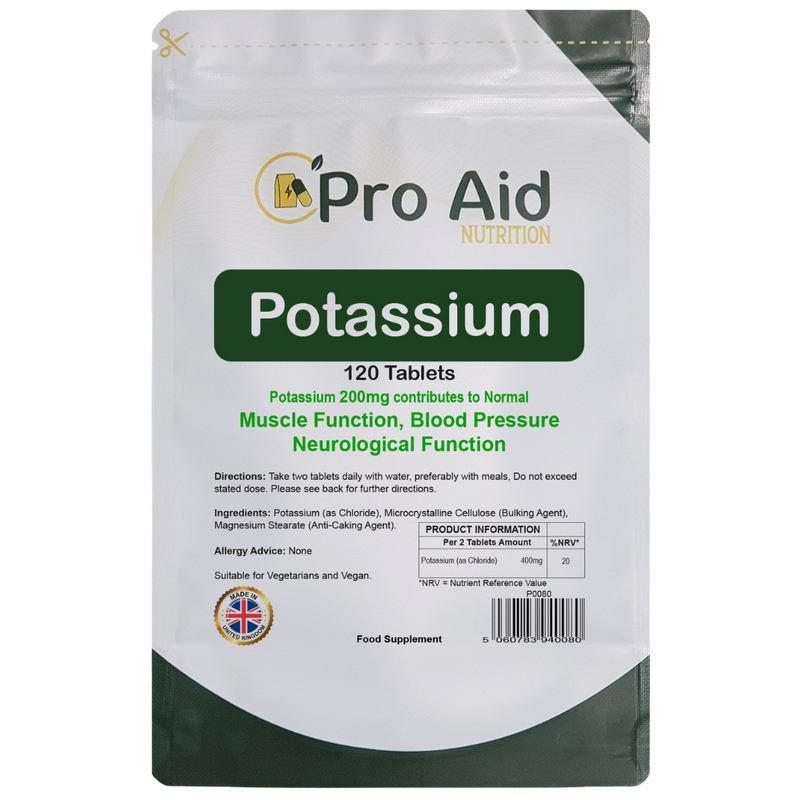
Proaid has two potassium products. Both use the same daily dose. The difference is the pack size.
Potassium 200mg Tablets, 120 Pack
- Potassium 200mg per tablet, from potassium chloride
- Daily dose: 2 tablets, providing 400mg potassium (20% NRV)
- 120 tablets: at 2 tablets a day, one pack lasts 60 days (about 2 months)
- How to use: take two tablets daily with water, preferably with meals
- Suitable for vegetarians and vegans
- Made in the UK, supplied in a resealable foil pouch
- Price: £5.99
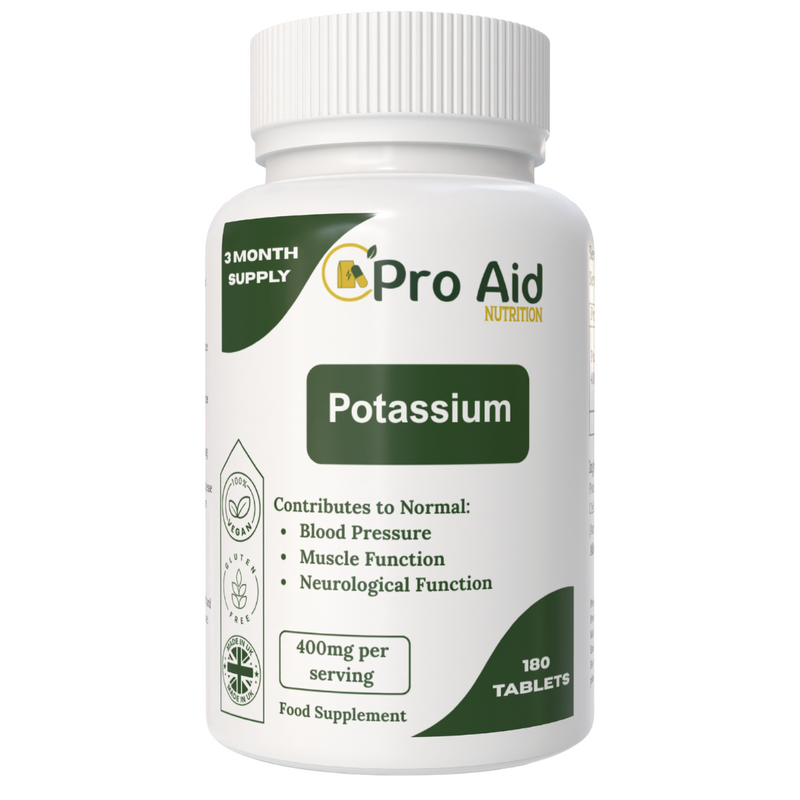
Potassium Tablets, 180 Pack
- Potassium 200mg per tablet, from potassium chloride
- Daily dose: 2 tablets, providing 400mg potassium (20% NRV)
- 180 tablets: at 2 tablets a day, one pack lasts 90 days (about 3 months)
- How to use: take two tablets daily with water or a meal
- Suitable for vegans; gluten free
- Made in the UK
- Price: £12.99
Both packs contain potassium (as potassium chloride). Potassium contributes to normal muscle function, the normal functioning of the nervous system and the maintenance of normal blood pressure.
At 400mg a day, either product provides well under the 3,700mg a day of potassium supplements that the NHS says is unlikely to have obvious harmful effects.
Potassium safety
- Food supplements should not be used as a substitute for a varied, balanced diet and a healthy lifestyle.
- Do not exceed the recommended daily dose.
- The NHS says that taking too much potassium can cause stomach pain, feeling sick and diarrhoea.
- The NHS advises that older people should not take potassium supplements unless advised to by a doctor.
- If you take any medicines, are pregnant or breastfeeding, or are under medical supervision, speak to your GP or pharmacist before taking a potassium supplement.
- Keep out of sight and reach of children.
FAQ
How much potassium do adults need a day?
The NHS says adults aged 19 to 64 need 3,500mg of potassium a day, and that you should be able to get all you need from your daily diet.
What foods are high in potassium?
The NHS lists bananas, some vegetables (such as broccoli, parsnips and brussels sprouts), beans and pulses, nuts and seeds, fish, beef, chicken and turkey as good sources.
What does potassium do in the body?
Potassium contributes to normal functioning of the nervous system, normal muscle function and the maintenance of normal blood pressure.
Is it safe to take a potassium supplement every day?
The NHS says that taking 3,700mg or less of potassium supplements a day is unlikely to have obvious harmful effects. Always follow the directions on the pack and do not exceed the recommended daily dose. Older people should not take potassium supplements unless advised to by a doctor. If you take any medicines or are under medical supervision, speak to your GP or pharmacist first.
How much potassium is in Proaid's potassium tablets?
Each tablet provides 200mg of potassium from potassium chloride. The daily dose is 2 tablets, which provides 400mg of potassium, or 20% of the NRV.
Sources
- NHS: Vitamins and minerals – Others (potassium section)
- GOV.UK: Great Britain nutrition and health claims (NHC) register
- Proaid product labels and listings for the two potassium products linked above
This article is for general information only and is not a substitute for advice from your GP, pharmacist or another healthcare professional.
Food supplements should not replace a varied, balanced diet and a healthy lifestyle. This guide is for general information only. If you are pregnant, breastfeeding, taking medication or under medical supervision, speak to your GP or pharmacist before taking supplements.